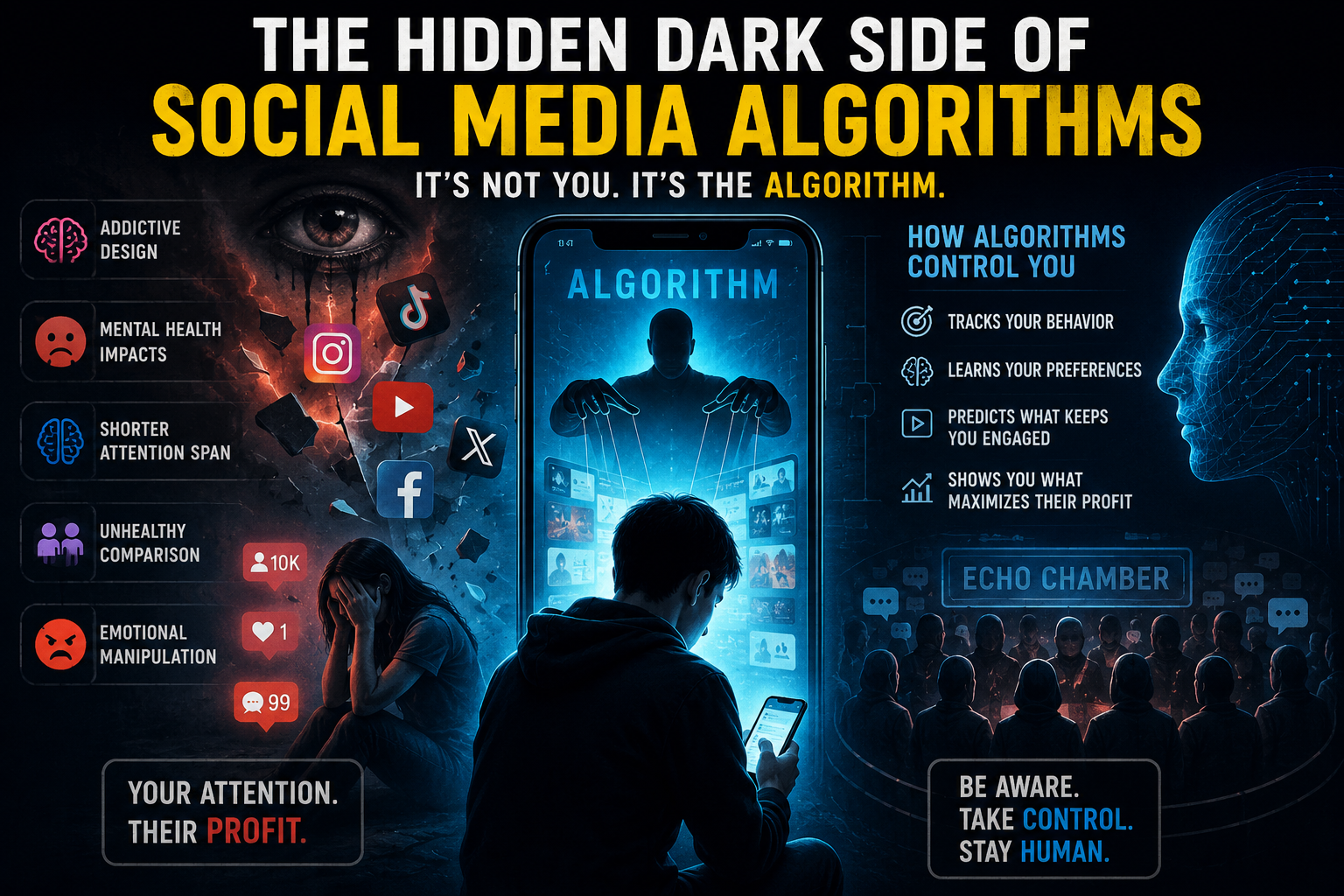
The Hidden Dark Side of Social Media Algorithms
Social media has become one of the most powerful forces in modern human life. Billions of people open apps like Instagram, TikTok, YouTube, Facebook, and X every single day. These platforms entertain us, connect us with friends, help businesses grow, and provide endless information within seconds.
But behind every post, video, recommendation, and notification lies something invisible that controls almost everything we see online — social media algorithms.
Artificial Intelligence and social media are becoming deeply connected in modern society. Read our article how ai is quietly changing at https://dailythoughts.com/ai-changing-human-life
The dark side of social media algorithms is not always obvious. In fact, that is what makes them so powerful.
What Are Social Media Algorithms?
A social media algorithm is a system that decides which content users see first. Instead of showing posts in simple chronological order, platforms now prioritize content based on engagement and user behavior.
Algorithms track:
What users like
What they watch repeatedly
How long they stay on a video
What they comment on
What they share
What emotions trigger reactions
Using this information, platforms create highly personalized feeds designed to maximize attention and engagement.
For example, if someone watches motivational videos frequently, the algorithm shows more motivational content. If a user watches controversial or emotional videos, the platform quickly learns to recommend similar content.
This creates a digital environment where algorithms slowly shape what people think, feel, and focus on every day.
The Addiction Problem
One of the biggest criticisms of social media algorithms is that they are designed to be addictive.
Platforms compete for human attention because attention generates advertising revenue. The longer users stay online, the more ads they see. As a result, algorithms prioritize content that keeps people scrolling continuously.
Short videos, emotional posts, shocking headlines, and endless recommendations are all carefully optimized to trigger dopamine responses in the brain. Over time, users begin checking social media automatically without even realizing it.
Many people now spend several hours daily on social platforms. Notifications interrupt focus, reduce productivity, and create constant mental stimulation. Even moments of silence or boredom have become uncomfortable for many users because they immediately reach for their phones.
This constant digital engagement affects concentration and emotional balance. Studies suggest that excessive social media use may contribute to anxiety, sleep problems, stress, and reduced attention spans.
The addiction is not accidental. It is part of how modern algorithms are designed.
Emotional Manipulation
Social media algorithms do not simply show content randomly. They often prioritize content that creates strong emotional reactions.
Why?
Because emotional content generates higher engagement.
Posts that create anger, fear, excitement, outrage, or controversy usually receive more likes, comments, and shares than calm or neutral content. Algorithms recognize this pattern and amplify emotionally charged material.
As a result, users are repeatedly exposed to dramatic news, heated arguments, shocking videos, and emotionally intense discussions.
Over time, this can influence mental health and emotional stability. Constant exposure to negative or extreme content may increase stress, fear, frustration, and emotional exhaustion.
Some experts believe modern social media platforms are unintentionally creating a society that is constantly emotionally overstimulated.
The Decline of Attention Spans
Another major effect of algorithms is the decline of human attention spans.
Short-form content platforms encourage users to consume information rapidly. Videos lasting only a few seconds are designed to provide instant entertainment before the brain loses interest.
This creates a habit of constant stimulation. Many people now struggle to focus on:
Books
Long articles
Deep conversations
Studying
Complex thinking
The brain becomes trained to expect quick rewards and constant novelty.
As algorithms continue optimizing for speed and engagement, deep thinking and patience may slowly decrease in modern digital culture.
The Comparison Culture
Social media algorithms also contribute to unhealthy comparison.
Platforms usually promote:
Attractive lifestyles
Luxury
Success stories
Perfect appearances
Viral achievements
Users constantly compare their real lives to carefully edited online content.
This can lead to:
Low self-esteem
Insecurity
Anxiety
Fear of missing out
Pressure to appear perfect
Young people are especially affected because social validation increasingly depends on likes, followers, and online attention.
Although social media can inspire people positively, it can also create unrealistic expectations about beauty, success, relationships, and happiness.
Echo Chambers and Polarization
Algorithms often show users content similar to what they already believe or enjoy. While this increases engagement, it also creates something called an “echo chamber.”
An echo chamber is a digital environment where people mainly see opinions that match their existing beliefs. Opposing viewpoints become less visible.
Over time, this can increase:
Political division
Social polarization
Misinformation
Hostility between groups
Instead of encouraging open discussion, algorithms may unintentionally push people into separate digital bubbles.
This is one reason why online arguments and social tensions have become more intense in recent years.
Can Social Media Be Positive?
Despite these concerns, social media itself is not entirely negative.
Algorithms can also:
Help creators grow
Spread educational content
Build businesses
Raise awareness
Connect communities
Support mental health resources
Many people learn valuable skills, discover opportunities, and build meaningful relationships online.
The real issue is balance and awareness.
Social media becomes dangerous when people lose control over how they use it. Understanding how algorithms influence behavior is the first step toward healthier digital habits.
The Future of Social Media
As Artificial Intelligence becomes more advanced, social media algorithms will become even more powerful.
Future algorithms may understand:
Emotions
Facial expressions
Voice tone
Personal habits
Psychological patterns
This could create highly personalized digital experiences unlike anything humans have seen before.
The challenge for society will be maintaining human independence, emotional health, and critical thinking in a world increasingly controlled by algorithms.
Governments, companies, schools, and individuals may all need to rethink how technology should shape modern life.
Conclusion
Social media algorithms are among the most powerful invisible systems in the modern world. They influence what billions of people watch, think, feel, and discuss every day.
While these algorithms make digital experiences personalized and entertaining, they also carry hidden risks involving addiction, emotional manipulation, attention spans, mental health, and social division.
Technology itself is not the enemy. The real challenge is learning how to use it consciously instead of allowing it to control human behavior completely.
As society moves deeper into the digital age, understanding the hidden power of social media algorithms may become one of the most important skills of the future.