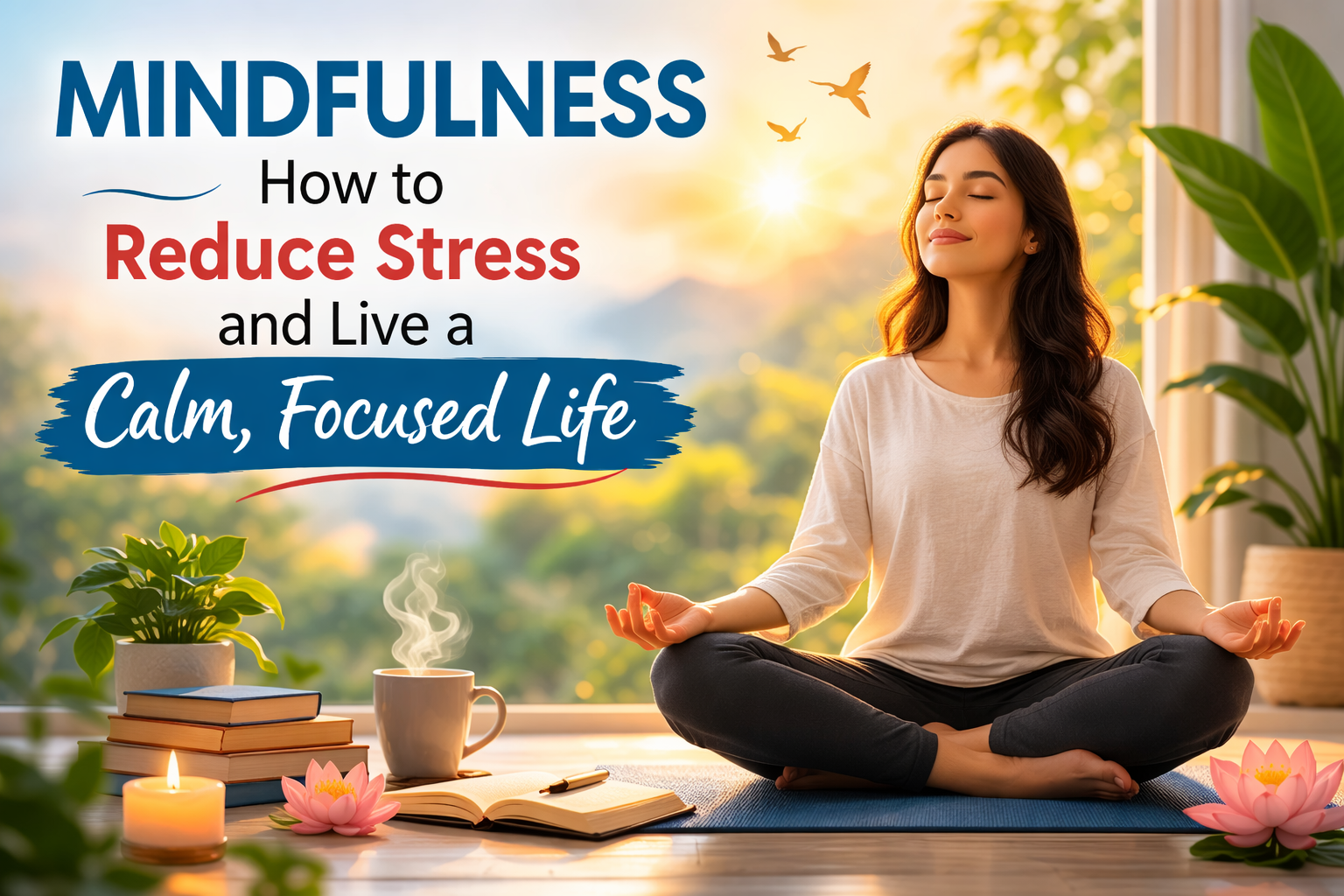
In today’s fast-paced world, stress has become a common part of life. Deadlines, responsibilities, social pressures, and constant connectivity leave us feeling overwhelmed. While stress is inevitable, the way we respond to it can make a huge difference. This is where mindfulness comes in—a practice that helps calm the mind, increase focus, and reduce anxiety.
Mindfulness is the art of being fully present in the moment. It means paying attention to your thoughts, emotions, and surroundings without judgment. Instead of worrying about the past or fearing the future, mindfulness teaches us to focus on the here and now. When practiced consistently, it can transform the way we handle stress and challenges.
One of the simplest ways to practice mindfulness is through breathing exercises. Deep, conscious breathing helps calm the nervous system and brings clarity to the mind. Try taking slow breaths—inhaling for four counts, holding for four, and exhaling for six. Even a few minutes of mindful breathing can reduce tension and improve focus.
Another effective method is body scanning. This involves paying attention to different parts of your body, noticing any tension or discomfort. By acknowledging these sensations without judgment, you release mental and physical stress. Over time, body scans increase self-awareness and help you respond to stress more calmly.
Mindfulness can also be incorporated into daily activities. Eating, walking, or even washing dishes can become mindful practices. For instance, while eating, notice the texture, taste, and aroma of your food.
When walking, feel the ground beneath your feet and the rhythm of your movement. These small acts of awareness train your brain to focus on the present and reduce scattered thoughts.
In addition, meditation is a cornerstone of mindfulness practice. Even five to ten minutes daily can help reduce stress hormones, improve emotional regulation, and boost overall well-being. Meditation doesn’t require a perfect setting or a specific posture.
The key is consistency and the intention to be present.
Stress often arises from overthinking and negative self-talk. Mindfulness teaches us to observe our thoughts without identifying with them. For example, if you notice a worry, instead of saying “I am stressed,” you acknowledge, “I am having a stressful thought.” This subtle shift creates distance between you and your worries, reducing their impact.
Technology can both help and hinder mindfulness. Apps for meditation and relaxation provide guided exercises, reminders, and tracking. At the same time, excessive screen time and social media can increase stress. Mindfulness encourages a balanced approach—using technology intentionally rather than being controlled by it.
Gratitude is another component of mindful living. Taking a few moments each day to recognize what you are thankful for can shift your perspective from stress to appreciation. Studies show that gratitude enhances mood, reduces anxiety, and strengthens relationships.
Mindfulness also strengthens resilience. Life will always present challenges—work pressure, relationship issues, financial concerns—but mindful individuals respond with awareness rather than reaction. By observing emotions without being overwhelmed, you make better decisions and maintain emotional balance.
Incorporating mindfulness into your routine doesn’t require dramatic lifestyle changes. Start small. Set aside a few minutes for breathing exercises, notice your thoughts, or practice gratitude. Gradually, you’ll notice a calmer mind, improved focus, and a greater sense of well-being.
It’s also helpful to create a mindful environment. A clean, organized space, a few indoor plants, and moments of quiet throughout the day can reinforce mindfulness. Surrounding yourself with calming stimuli reduces mental clutter and supports a relaxed state of mind.
Finally, remember that mindfulness is a journey, not a destination. There will be days when your mind wanders excessively or stress seems overwhelming. This is natural. The key is to return to the present moment with patience and kindness toward yourself.
In conclusion, mindfulness is more than just a practice—it’s a way of life. By being fully present, observing thoughts without judgment, and cultivating gratitude, you can reduce stress and improve your overall mental and emotional well-being. In a world full of distractions and pressures, mindfulness is the secret to a calmer, more focused, and stress-free life.
Start today. Take a deep breath, notice the moment, and embrace the peace that comes from being truly present. Your mind, body, and soul will thank you.